Utah Housing Market 2026: Will Buyers or Sellers Flinch First?
By Andrew Diaz · Hinge Real Estate LLC · REALTOR® & Certified Residential Appraiser (Lic #6171357-SA00) · Published October 27, 2026 · Updated October 2026 · 8 min read
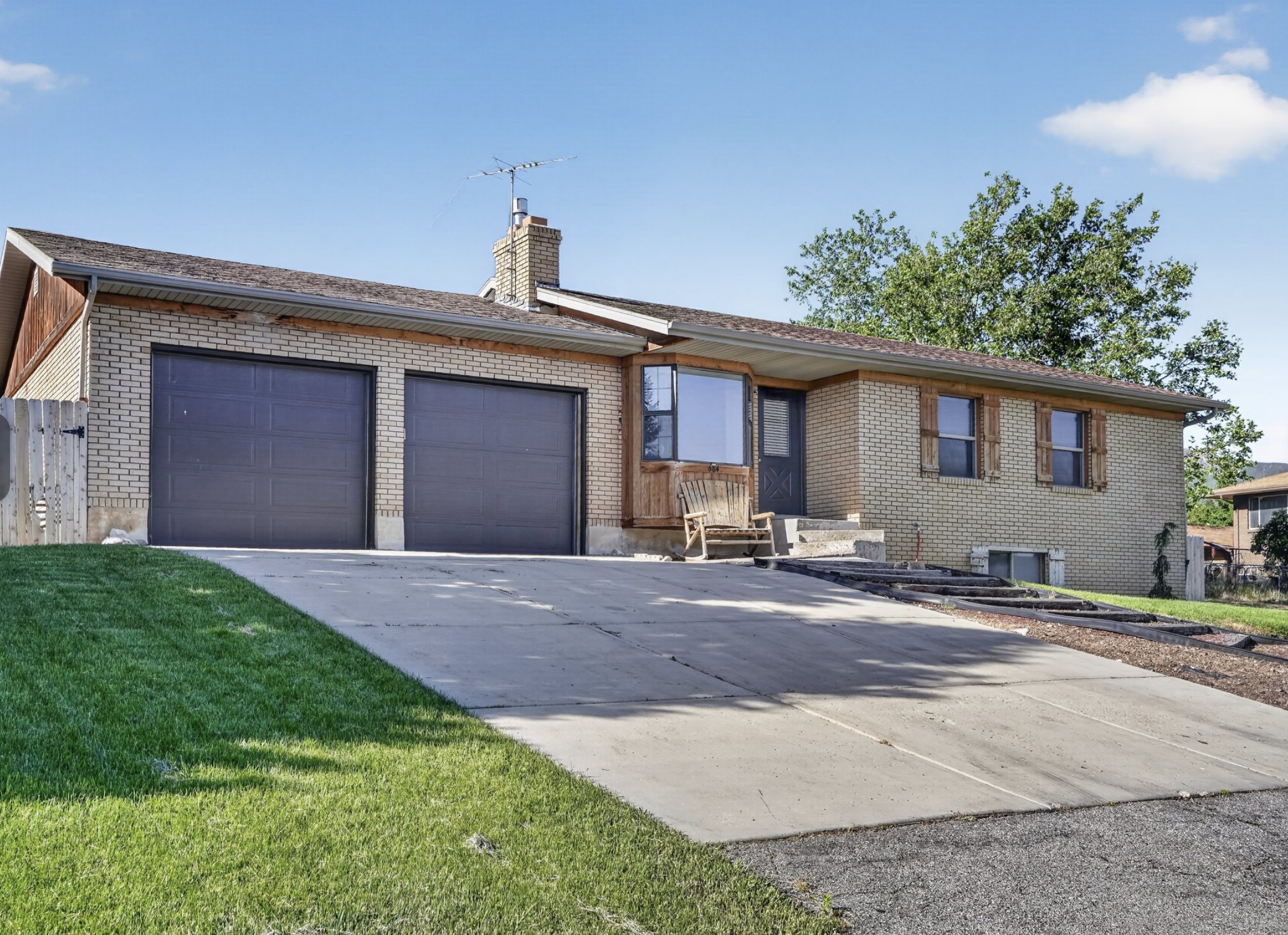
The short answer: Utah's 2026 housing market is a standoff — a "game of chicken" between sellers still hoping for 2021 prices and buyers squeezed by mortgage rates near 7.3% and a tighter job market. Andrew Diaz's read as a local appraiser: sellers blink first. As "want-to-sell" listings wash out and "have-to-sell" owners take their place, he expects a 10–15% correction back toward the mean on homes priced under about $1.5 million — a reset, not a 2008-style crash. If you're buying, the smart move right now isn't to jump; it's to get fully prepared so you can move the moment inventory and list-to-sale ratios start to tighten.
ON THIS PAGE
- The standoff: why Utah's market is deadlocked
- Are Utah homes overpriced right now?
- Is it a bad time to sell in Utah County?
- Who flinches first — buyers or sellers?
- Could Utah see a 2008-style crash?
- Townhomes and condos: the first dominoes
- What buyers should do right now
- Watch the full conversation
- Frequently asked questions
The standoff: why Utah's market is deadlocked in 2026
If the Utah housing market feels stuck right now, that's because it is. Sellers are holding out for the prices they saw a few years ago, and buyers — facing higher rates, a tighter job market, and higher prices — simply can't or won't pay them. The result is a slow-motion game of chicken, and both sides are waiting for the other to move first.
The math behind the freeze is real. The average 30-year fixed mortgage rate sat at about 7.3% in late October 2026 — the first dip in nine weeks after touching 7.4% earlier in the month (Trading Economics, Oct 22, 2026). A year earlier the same rate was closer to 6.3% (Freddie Mac via Best Utah Real Estate, Sep 2026). That jump has quietly erased a chunk of every buyer's purchasing power, which is exactly why the market has slowed.
The takeaway: this isn't a crash in progress — it's a deadlock. And deadlocks always break in one direction eventually.
Are Utah homes overpriced right now?
In a word, often yes — at least relative to what today's buyers can actually pay. Andrew's blunt take: a lot of Utah sellers (and their agents) are still listing too high for the buyer pool that exists. Back in 2020–2021, when people were leaving California for "the next prettiest place," Utah was one of the top landing spots, alongside Texas, Florida, Arizona, and Idaho. That wave has faded.
"We're back to just kind of being Utah," Andrew says — and he means that as a compliment to the place and a reality check on price. His point: people won't spend $3 million to live in Utah when, after the California market softened, that same $3 million can buy back in California. The premium out-of-state buyers were willing to pay has thinned out.
The current data backs up the cooling, even if it doesn't crown Utah the single most overpriced state. Across the Salt Lake City metro, 33.6% of listings had a price cut in September 2026 — the highest share of any of the 50 largest U.S. metros, versus 20.8% nationally (Realtor.com via Best Utah Real Estate, Sep 2026). Statewide, sellers who do close are netting roughly 96% of their original asking price. In plain terms: list prices and sale prices have drifted apart, and sellers are the ones chasing the gap.
Is it a bad time to sell in Utah County?
This is where a lot of homeowners get stuck, and where Andrew pushes back on the obvious answer. Yes, you probably won't get a 2021 price. But selling and buying are two halves of the same move — and that changes the calculation.
Most would-be sellers are sitting on a 2–3% mortgage from the refi era, which is a very good reason not to walk away casually. But if you do sell, you likely still walk away with real equity — just not peak-era equity. And then you become a buyer facing today's rates. Here's Andrew's key insight: if it's a good time to buy, it's also a good time to sell. You may get less for your house, but you're also paying less (in relative terms) for the next one. The discount cuts both ways.
So the honest answer to "is now a bad time to sell?" is: it depends on whether you have to move. Which leads to the real question —
Who flinches first — buyers or sellers?
Andrew's call: sellers. Not because they want to, but because of who's left in the market. Right now a large share of listings belong to sellers who want to sell — they'd like to see what they can get, but they don't need the money. Those listings, he argues, will quietly wash out of the market (delisted rather than cut), creating what he calls a "seller strike" that keeps buyers on the sidelines.
What's left behind are the sellers who have to sell — job loss, a job relocation, a family situation. For them it's not "I'd like to," it's "I have to." As those become a bigger share of active inventory, prices start reflecting what the market will actually bear rather than what sellers wish it would.
The current numbers are already leaning this way. Utah had 4.7 months of supply in September 2026 (roughly six months is the traditional buyer's-market line), with pending sales down 26.8% year over year and the state's affordability index sliding to 73 from 79 (Utah Association of Realtors / Best Utah Real Estate, Sep 2026). The market is "slowing down, not crashing" — which is almost word-for-word Andrew's thesis.
Where buyers and sellers stand in late 2026
| Factor | Sellers | Buyers |
|---|---|---|
| Mortgage position | Locked into 2–3% — reluctant to move | Facing ~7.3% today; Andrew expects a 5–6% "new normal" over time |
| Pricing power | Still anchored to 2021 prices | Constrained; purchasing power cut by higher rates |
| Leverage trend | Weakening — price cuts rising, pending sales falling | Growing — more choice, less competition |
| Best move now | Price to the real buyer pool, or wait only if you don't need to sell | Get fully prepared; watch inventory & list-to-sale ratio closely |
Synthesized from Andrew's on-camera analysis plus current market data cited above.
Could Utah see a 2008-style crash?
Short answer from an appraiser who worked through the last one: no. Andrew expects a correction of roughly 10–15% back toward the mean — a healthy reset, not a collapse.
His historical point: even in 2008, Utah fared better than the hardest-hit states. While some markets saw home values fall around 50%, Andrew recalls northern Utah holding up far better than southern Utah. The broad data is directionally consistent — Utah's statewide FHFA home-price index fell about 20.5% peak-to-trough from 2007 to 2011, roughly in line with the national ~20.1% average and far short of the 40–50% drops in the worst bubble states (FHFA HPI via Housing Almanac). (Andrew's recollection of "25–30%" for Utah runs a bit above the statewide index figure — worth noting, but the core point holds: Utah corrected less than the states that crashed hardest.)
Why a reset might actually be healthy: Andrew argues it would do something Utah has needed for a long time — bring young buyers back into the market. There's a whole generation with decent jobs and growing incomes for whom the entry-level market basically doesn't exist right now. A correction, plus sellers getting more realistic, would have a trickle-down effect on entry-level homes.
The caveat he's honest about: this depends on the jobs picture. If private cash floods back into Utah's tech sector and hiring surges in the next 6–9 months, he says, he's wrong. But if jobs stay scarce and another round of tech layoffs lands — and Silicon Slopes hiring was reported "at a standstill" in early 2026 — today's stagflation in real estate tips into a real correction.
Townhomes and condos: the first dominoes
This is where Andrew's appraiser lens earns its keep. In a market shift, he notes a reliable pattern: townhomes and condos are the last property type to rise and the first to fall. And right now Utah has a lot of building happening in exactly that segment.
When builders feel their buyer pool tightening, he says they move in a predictable order:
- Free upgrades first. Reduced prices on packages of interior upgrades — the cheapest concession to make.
- Rate buydowns next. They pool investor money to offer something like a 1-year 3% or a 3-year 3% rate with a balloon at the end — betting that within three years you've either moved or it's your problem, not theirs. (Andrew notes this is part of why the 2008 downturn produced more foreclosures and short sales in townhomes than in single-family homes.)
- Price drops last. Finally, on older phases, they cut the actual price — the last-ditch move.
His read on the present: over roughly the last 18 months we've already seen heavy rate-decrease and "buy with us, no appraisal, in-house lender" marketing from certain townhome and condo builders. To Andrew, that's step two of the playbook — the writing on the wall for what comes next in that segment.
He points to Alpine as a live example of inventory stacking up at the high end. On camera (mid-April 2026) he counted the active listings jump from 36 to 39 in a day against roughly five sales a month — close to eight months of inventory — with a list-to-sale ratio hovering near 94%. "That's got to break at some point," he says. For context, Alpine's most recent data shows the luxury slowdown continuing: about 6 sales in September 2026, a median sale price in the $2.3–2.8M range, a sale-to-list ratio near 96%, and roughly 67–76 median days on market(Best Utah Real Estate / Movoto, Sep 2026).
What first-time and move-up buyers should do right now
When Trent (who's in the buyer pool himself) asked whether now is the moment to jump in, Andrew pushed back — and his reasoning is the most useful part of the whole conversation.
Don't rush the entry. Prepare for the entry. Rates aren't moving down meaningfully yet, and seller pricing still hasn't fully reached the entry-level buyer. So Andrew's advice to first-time buyers is to use this window to do the homework:
- Find out what grant and down-payment-assistance options you actually qualify for. Utah has real programs — the Utah Housing Corporation's FirstHome and HomeAgain down-payment-assistance second mortgages (up to ~6% of the loan), a Score Loan option, and a $2,500 forgivable veterans grant, plus city and county programs (The Mortgage Reports, 2026).
- Know your real purchasing power. Have an honest conversation with your lender about your job stability, expendable income, and debt-to-income ratio.
- Research the specific area and price segment you want to start in. Remember: this isn't your forever home, it's your get-into-the-market home.
- Reset your rate expectations. Andrew expects something in the 5–6% range to be the norm for a while and doesn't see rates dropping much below 5% soon, absent some government intervention. (Today's actual rate is higher — ~7.3% — so treat 5–6% as his forward-looking view, not today's quote.)
The two numbers to watch. Andrew's instruction to any buyer waiting for the turn: stay in regular contact with your agent and track, in your price point and your area, (1) the months of inventory and (2) the list-to-sale price ratio. When months of supply starts to dip and that ratio tightens, that's your signal. Catch it just before everyone else, he says, and even "overpaying" by $5–10K can save you from a brutal multiple-offer war when the market turns competitive again.
And one honest reminder from the video: a $3 million home that listed and sold for $3.2 million isn't a counterpoint to any of this. That's a different market segment — a 1% buyer — not the entry-level economics most people are living in.
Watch the full conversation
Andrew and Trent break down the 2026 standoff (while attempting some golf). Click to watch on YouTube:
 ▶
Utah Housing Market 2026: Who Flinches First? — Andrew Diaz, Moving to Utah County.
Key moments
- 0:00 — The "game of chicken" deadlocking Utah's market
- 1:34 — Why sellers are listing too high
- 3:21 — The "seller strike": delisting instead of cutting
- 5:41 — Must-sell listings wash out the want-to-sell ones
- 6:56 — The call: a 10–15% correction, not a 2008 crash
- 8:22 — Why townhomes and condos fall first
- 11:15 — Alpine's eight months of inventory
- 11:55 — Should a first-time buyer jump in now?
- 14:47 — The two numbers every buyer should watch
From the conversation (highlights)
"What we wanted to talk about today was the wild game of chicken that's currently deadlocking the housing market here in Utah — sellers holding out for higher prices, and buyers constricted with their purchasing power compared to 3 or 4 years ago."
"We have sellers that are often choosing to just delist their homes rather than cut prices. It's causing what I'm calling a seller strike that's keeping buyers out of the market."
"If it's a good time to buy, it's also a good time to sell — you may not get as much out of the house, but you're also not having to pay as much for the next house you get into."
"What we're going to find are sellers that are in a position where they need to sell — job loss, a change of job location, a family situation. It's not 'I'd like to,' it's 'I have to.'"
"I think we're probably going to see about a 10 to 15% recession back to where property should be … ultimately it's going to bring our young buyers back into the market."
"As an appraiser, the last properties to increase are townhomes and condos — and the first properties to decrease when the market adjusts are townhomes and condos."
"Right now in Alpine alone we have 39 homes and we're averaging five home sales a month — almost eight months of inventory, with a list-to-sales ratio hovering around 94%. That's got to break at some point."
"For a first-time buyer, I'd take this time to find out what grant options are available, what your real purchasing power is, and do some real research … and get ready for a 5½% interest rate to be the norm for a while."
Lightly edited from the spoken transcript for readability. Market figures reflect conditions as of mid-April 2026 when the video was filmed; see the "Updated October 2026" figures and citations above for current numbers.

About Andrew Diaz
Andrew is a REALTOR® & Certified Residential Appraiser with Hinge Real Estate LLC (Utah Lic #6171357-SA00). With 20+ years valuing and selling homes across Utah County, bilingual in English and Spanish, he brings an appraiser's read to every market call. More about Andrew → · Zillow reviews (5.0★)
This article is general market information from a local real estate professional — not legal, tax, or financial advice. Market conditions change; verify current figures and consult your own lender and advisors before making a decision.
Thinking about buying or selling in Utah County?
Get the honest, appraiser-backed read on your price point before you make a move. Grab the free Moving to Utah County guide, or book a 20-minute call.
Get the Free GuideBook a CallKeep reading
Frequently asked questions
Is 2026 a buyer's or seller's market in Utah?
It's shifting toward buyers but isn't fully there yet. As of September 2026 Utah had about 4.7 months of supply (roughly six months is the traditional buyer's-market line), rising price cuts, and pending sales down about 27% year over year. Andrew's read: sellers are losing leverage and a correction is more likely than another run-up.
Will home prices drop in Utah in 2026?
Andrew expects a correction of roughly 10–15% back toward the mean on homes under about $1.5 million — a reset, not a 2008-style crash. He stresses it hinges on the job market: if Utah tech hiring stays soft, the dip is more likely.
Is it a bad time to sell a house in Utah County?
Not necessarily — it depends on whether you also need to buy. You likely won't get a 2021 price, but if you're buying your next home too, you pay relatively less for it. If you don't have to move and can wait, you may choose to; if you do have to move, price to the real buyer pool rather than to 2021.
Why aren't homes selling in Utah right now?
A standoff. Mortgage rates near 7.3% have cut buyers' purchasing power, while many sellers are still anchored to peak prices and would rather delist than cut — what Andrew calls a "seller strike." The result is slower sales and a widening gap between list and sale prices.
Should a first-time buyer wait or buy now in Utah?
Andrew says prepare now, buy on the signal. Use this window to line up grant and down-payment-assistance programs, confirm your real purchasing power with a lender, and research your target area — then watch months of inventory and the list-to-sale ratio in your price point. When both start to tighten, be ready to move before the crowd returns.